

Some software products come from research. Somebody studies a market, finds a gap, writes a plan, gets it funded.
Others come from an engineer who was annoyed. The second kind never appears on a roadmap, because a roadmap is a list of things somebody decided to do.
Both produce real products. Only one can be planned, so companies build processes around that one and quietly eliminate the conditions the other needs.
Performance work has nothing to demo
A successful performance project has nothing to show at the end. New features demo. Integrations demo. A dashboard demos. Performance work produces the absence of a problem, which is the hardest thing in technology to get paid for.
Ask for two weeks to make something faster and the question comes back: faster by how much, and what does that buy us. Both are fair questions and neither has an answer before the work is done.
So the work does not get approved. And then somebody does it anyway, on their own time, because they have to use the thing every day and it is driving them out of their mind.
Two engineers and a slow machine
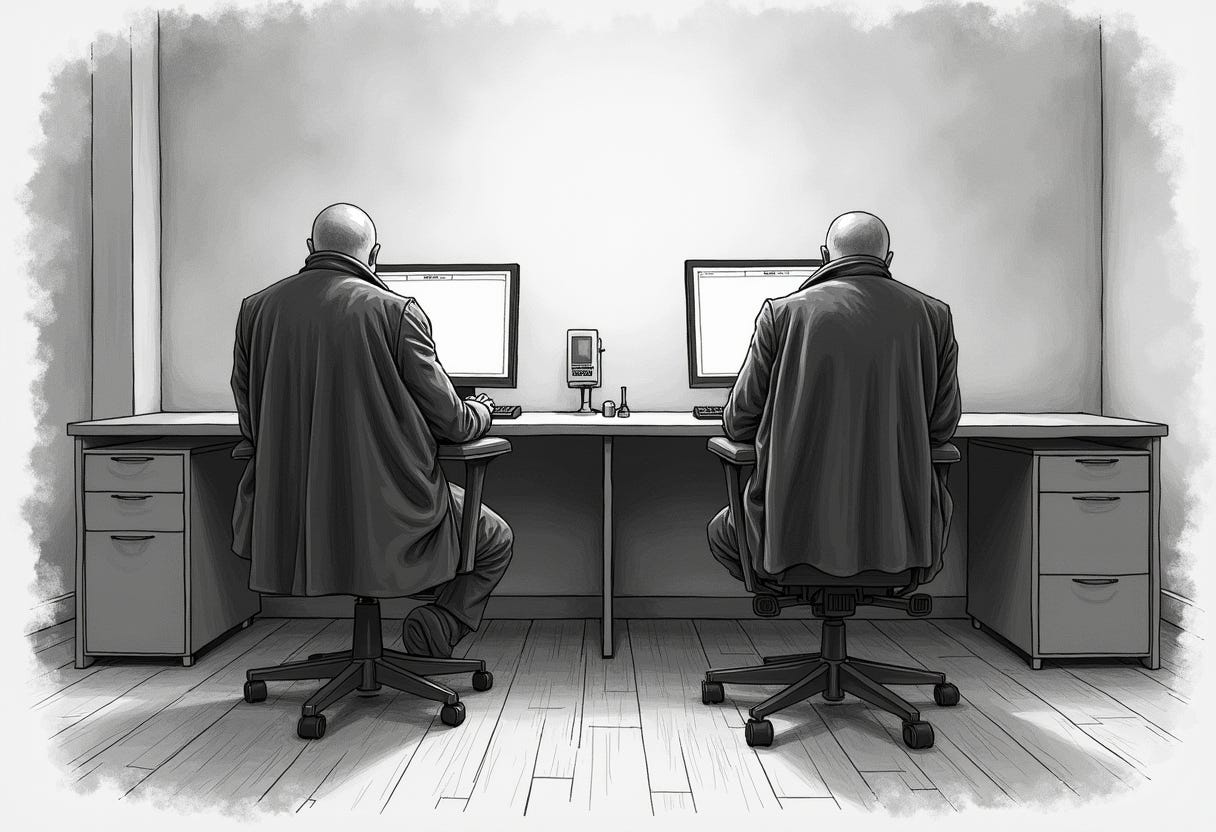
At the consulting firm where I spent my early career, Steve Davis and another engineer built a disk defragmenter for the operating system we all worked on.
No company mandate. Nobody assigned it, nobody scheduled it, and it did not appear in any plan. They did it on the side, because disks got fragmented and everything slowed down and they were tired of it.
Performance before and after was not marginally different. It was different by orders of magnitude.
Then somebody looked at what they had and realized it was a product.
The strategy came second
The original tool served the operating system our clients ran. The firm judged the larger opportunity to be on the other major platform of the era, so it turned into a port and a plan.
I led that side. We also decided to bundle rather than ship a single utility, so it became a set of disk tools. One person handled the defragmenter, another the directory program.
None of that was possible before the side project existed. The thing came first and the strategy was assembled around it afterward, which is the opposite of how the story usually gets told.
Slack is unassigned capacity
Unassigned capacity. Hours not allocated to anything in particular.
Slack is the first casualty when budgets tighten, and cutting it is easy to justify. Every hour is now attached to a deliverable and the numbers improve immediately.
What disappears is invisible, because it was never on a list. Nobody writes down the products that were not built because nobody had a spare afternoon.
I am not arguing for a formal program. Twenty percent time is a large-company answer to a large-company problem and it usually decays into another meeting.
The small-company version is simpler. Do not schedule every hour. Leave a margin, do not ask what it produced, and accept that most of it produces nothing.
Adoption without promotion is the test
Somebody built it without being asked, and then other people started using it.
That second half is the test, because adoption without promotion is hard to fake. When a tool spreads through a team because it is useful, the market research has already happened.
Ask two questions when you find one. Who else has started using this, and what were they doing before. If the answer to the second is something slow and painful, you may be looking at a product.
The mistake is the other reaction. A manager who discovers unapproved work and asks who authorized it will not get told about the next one, and there is always a next one.
Protect the exception. It costs a margin of unassigned time and the discipline to not ask what that margin produced. Cutting it looks free on a spreadsheet, and what you cannot see on the spreadsheet is the product nobody got around to building.
The full article is on my site: https://thewritingking.com/work-nobody-approved/. It runs longer, carries the diagrams, and answers the questions readers ask most.
These are AI-made summaries of longer articles on my site, written with AI assistance from my own interviews and my own career. Nothing goes out that I have not read and approved.